India's position among the world's tea-producing countries
 Projects / Goodricke GroupAll projects ↖
Regenerative agriculture / Project 04
Plantation health,
rebuilt from the soil upward.
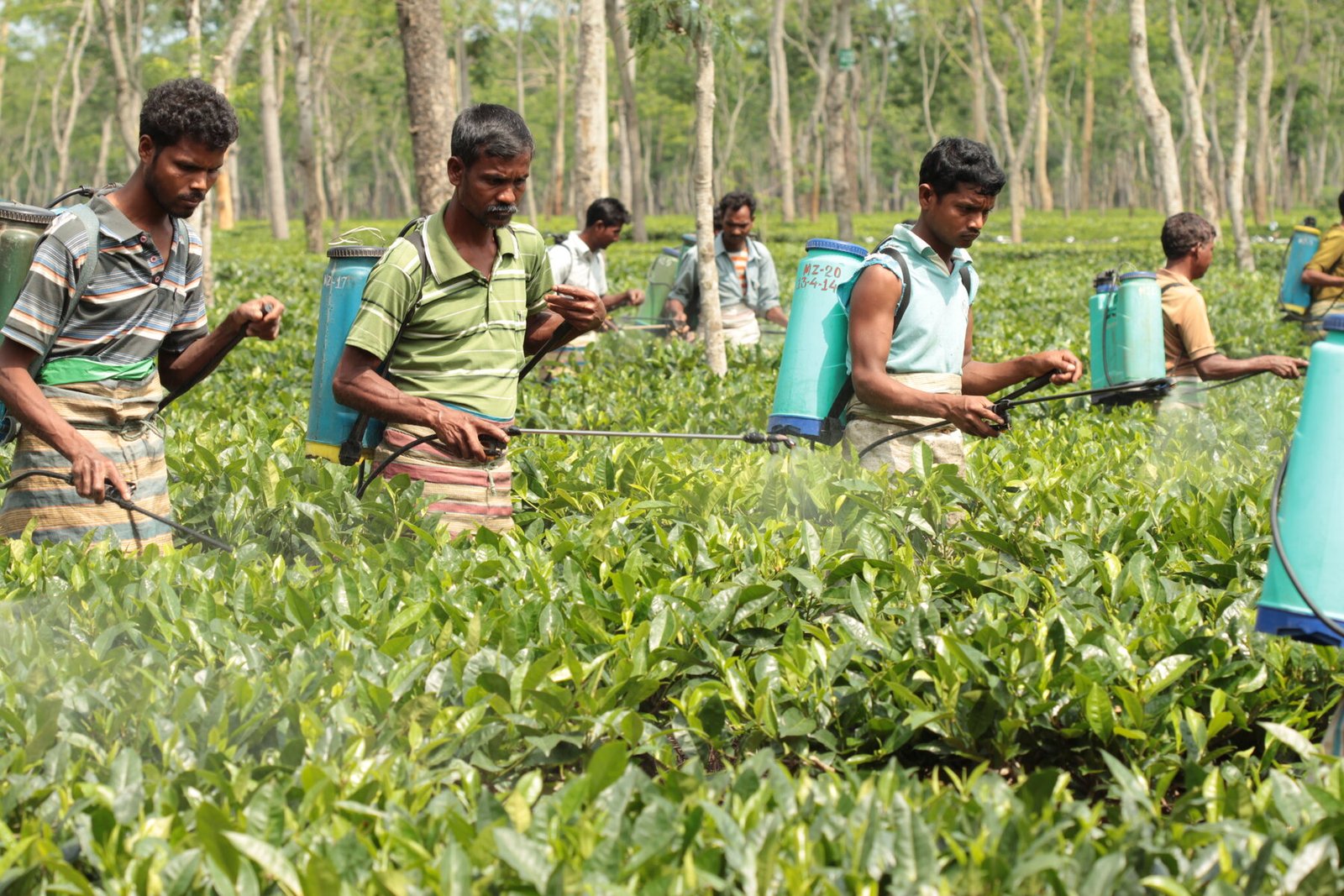
A large tea producer needed to reduce pest pressure without gambling with yield. Firefly designed a staged shift from chemical dependency towards biological crop protection and healthier plantation ecology.
The scale around the brief
A small input decision, multiplied across a very large industry.
These figures provide industry context. The one-year figure is the project-specific milestone reported by Firefly.
Area reported under organic tea cultivation in India
Potential crop loss associated with pest attacks
Goodricke's reported move towards biological crop protection
The brief, honestly stated
The estate did not need a greener-looking pesticide. It needed a safer way out of the pesticide cycle.
Climate change was altering pest pressure. Repeated chemical use could answer the immediate attack while weakening the soil biology, biodiversity and water systems that make a plantation resilient. An overnight conversion would put productivity and economics at risk. The useful answer had to work in stages.
What was really happening
One pest problem.
Four connected consequences.
The trap was not a single bad input. It was a loop that made the next intervention more necessary than the last.
The Firefly move
Change the system without shocking the business.
Large estates rarely need a dramatic announcement. They need a transition the people, plants and economics can survive.
Read the pressure
Identify what is driving pest attacks before prescribing another input.
Change the protocol
Introduce effective neem- and pongamia-based biological alternatives in manageable stages.
Rebuild from below
Strengthen soil health through composting, biomass cultivation and biofertilisers.
Connect the estate
Bring crop diversity, water, energy and long-term resilience into the next phase.
The practical difference
Biological does not mean vague.
Firefly combined neem and pongamia oils through a proprietary formulation designed for effective plant absorption and viable estate-scale use. The intervention was introduced alongside Good Agricultural Practices and Integrated Pest Management, not as a fashionable substitute for agronomy.
Explore regenerative agriculture ↗Start herePlant health
Biologicalcrop protectionLiving
soilCleaner
waterUseful
biodiversity
Impact / first year
Progress that operations could keep.
The useful measure of sustainability is not how impressive the pilot looks. It is whether the new behaviour survives the pilot.
Biological inputs became part of the operating protocol
Crop yields were protected through a staged transition
Biodiversity and ecological balance gained a practical route back
Freshwater sources faced less chemical pressure
Firefly’s original case study reports measurable progress towards replacing chemical pesticides within one year. Public reporting should pair the next phase with dated baselines and test data.
What this project proves
Regeneration becomes credible when it works with operational reality.
A plantation cannot pause while its ecology recovers. The design has to protect today’s crop while rebuilding tomorrow’s resilience.
Bring us your site challenge ↗