Regenerated on the hotel's first floor
 Projects / Taj MG RoadAll projects ↖
Green habitat / Project 03
A city-centre hotel,
given a quieter climate.
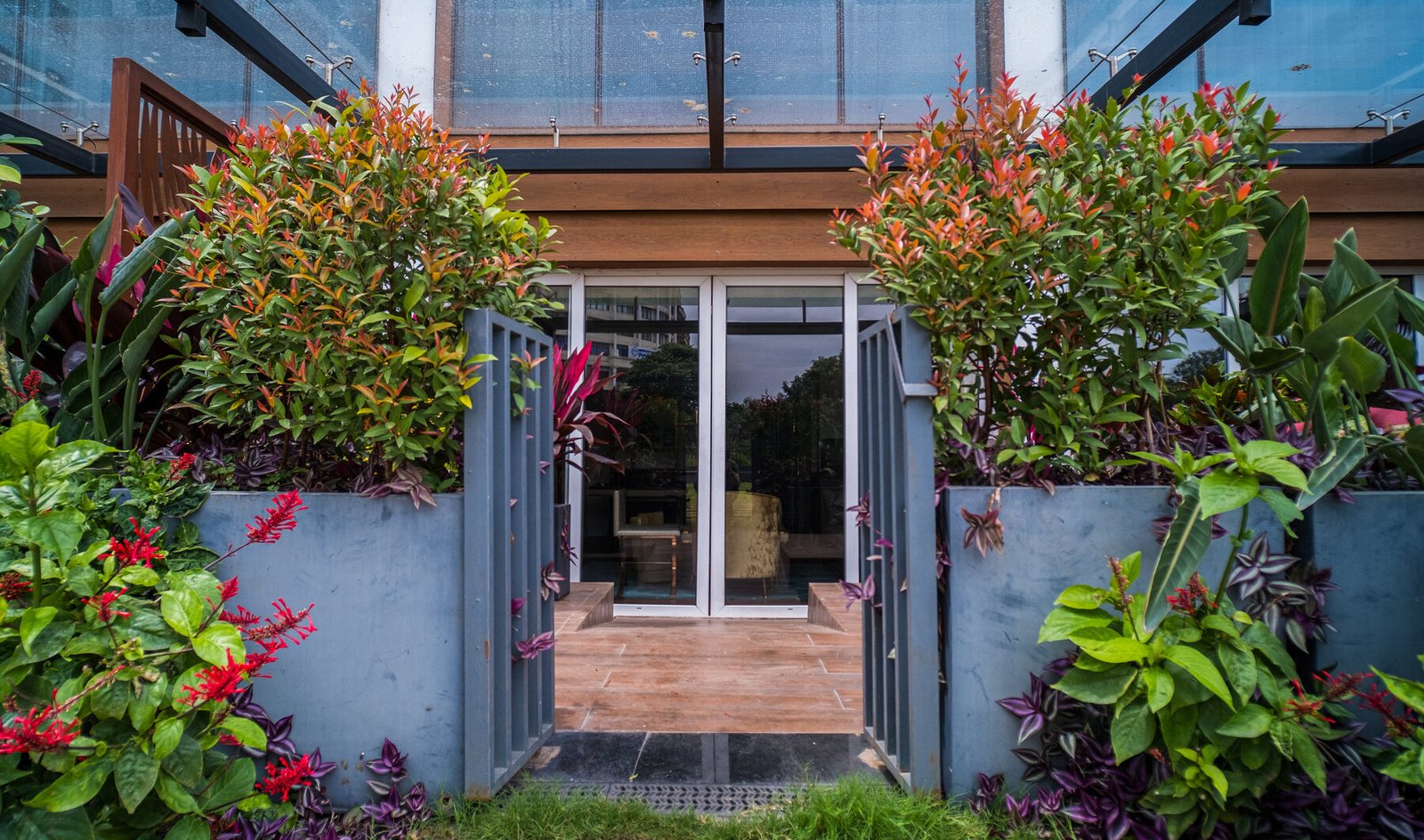
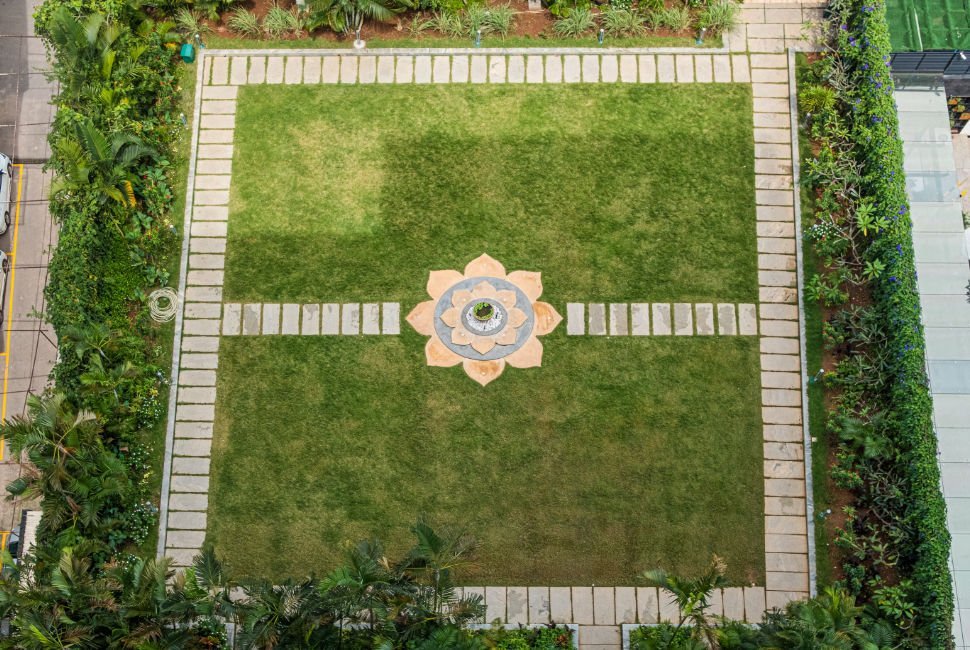
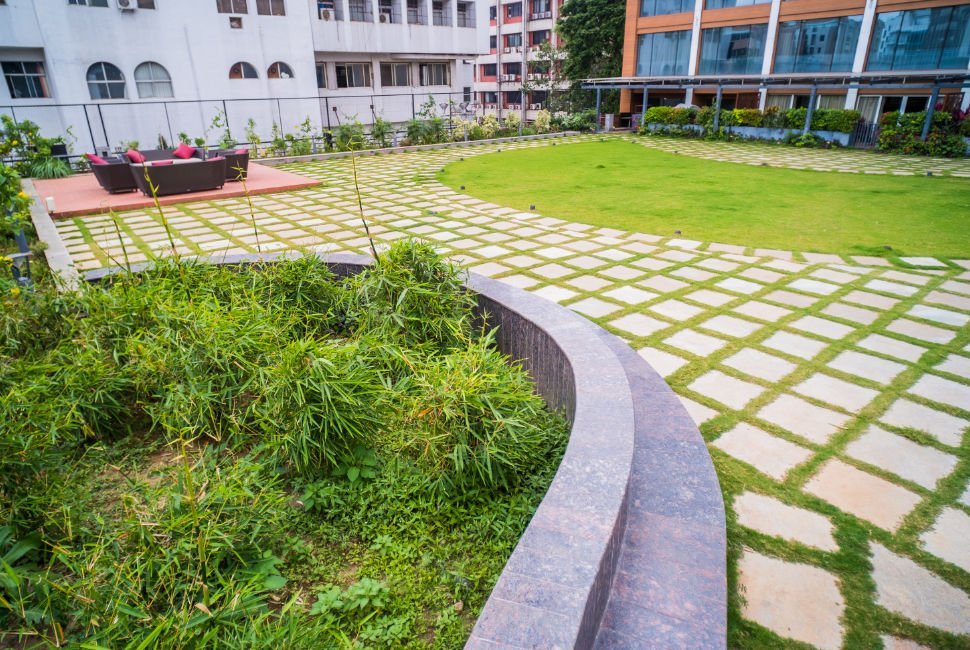
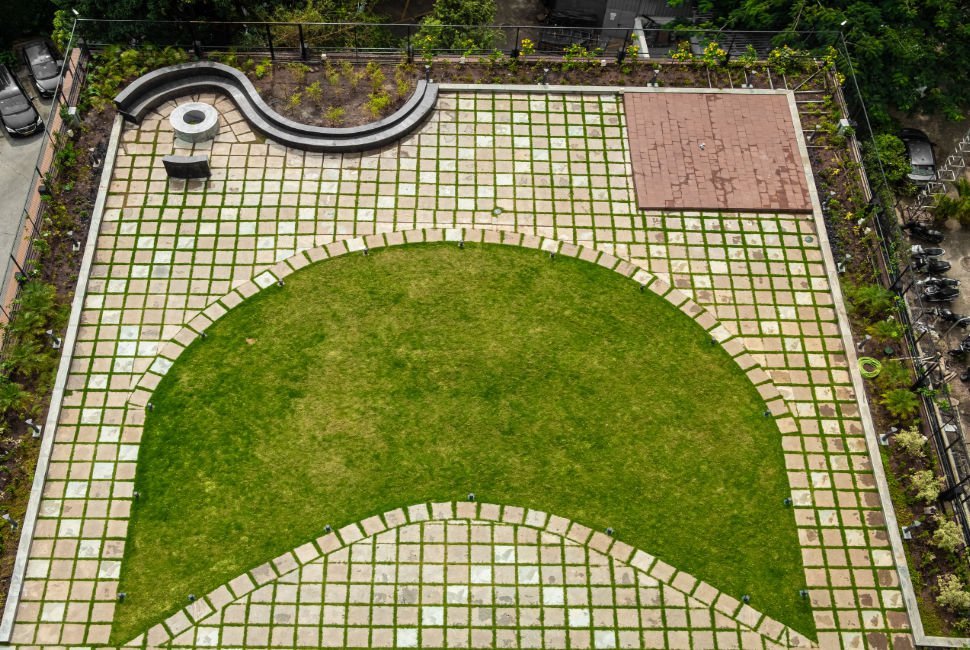
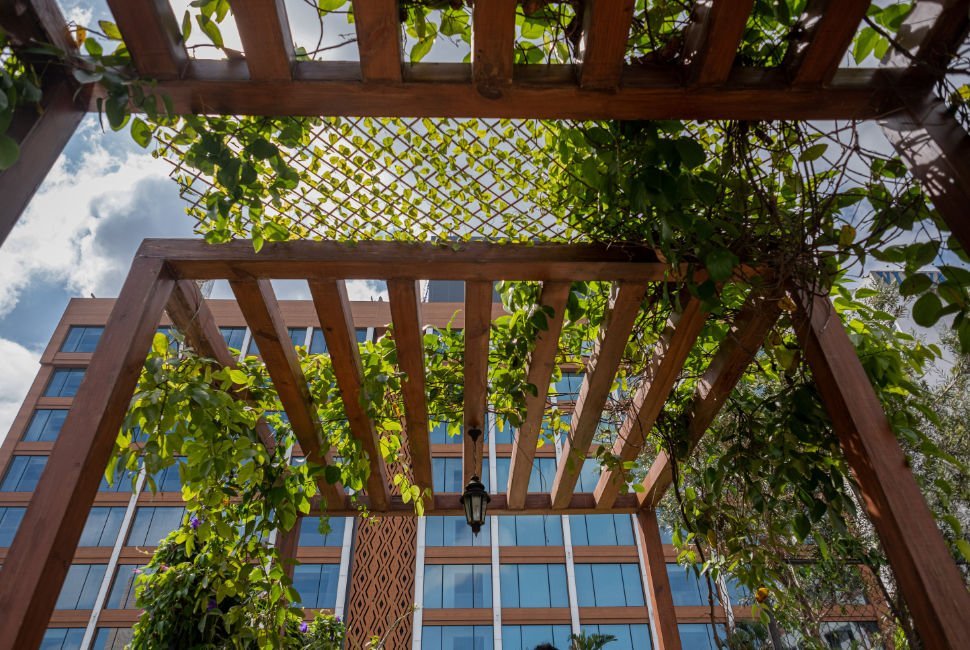
Two tired first-floor lawns sat beside Bengaluru traffic, concrete and the metro. Firefly redesigned them to soften the city, hold rain, welcome biodiversity and give guests a landscape worth spending time in.
The project in four numbers
Two lawns. More than one job.
The areas and water figure are reported in Firefly's original Taj case study.
Combined landscape area brought back into use
Reported rainwater harvesting capacity
Privacy, habitat, water management and guest use
The brief, honestly stated
The hotel did not need more landscaping. It needed the landscape to make the city less noticeable.
MG Road brings visibility, energy and access. It also brings noise, pollution, hard surfaces and difficult water behaviour. The useful answer was not to decorate around those realities, but to make the lawns actively edit them.
What was really happening
One urban address.
Four connected pressures.
What looked like a tired lawn was also a guest-experience, drainage, habitat and operating-cost problem.
The Firefly move
Make beauty carry some of the operational load.
The planting, water strategy and guest experience were designed together, so every visual choice also performed a practical job.
Read the exposure
Map the views, traffic, noise, wind, drainage and ways guests actually move through the lawns.
Frame the city
Use entrances, trellises, palms and sequential flowering to create privacy without making the space feel enclosed.
Make rain stay
Combine filtration media, indigenous planting and fishbone harvesting so water becomes an asset, not an afterthought.
Design for use
Keep the landscape flexible enough for quiet mornings, intimate gatherings and medium-sized evening events.
The practical difference
A good hotel landscape is not scenery. It is invisible service.
Sequential flowering curated the view. Palms and trellises softened noise and sightlines. Indigenous planting and filtration media helped manage water. The result was a calmer guest setting that remained useful for gatherings by day and night.
Explore green habitats ↗Start hereThe lawns
GuestexperienceRainwaterUrban
habitatMicroclimate
From the finished habitat
The landscape does its best work when the work is hard to notice.
Impact / reported
A prettier space that also became more useful.
When a landscape holds water, filters the city and attracts guests, sustainability stops being an extra feature and becomes part of the hotel experience.
Annual rainwater harvesting reported across the two lawns
A planted buffer between guests and the city
More useful space for local flora and fauna
A flexible venue rather than decorative leftover space
Firefly's original case study reports annual harvesting of up to 15 lakh litres from the two lawns. Future reporting should pair this with dated water, biodiversity and maintenance baselines.
What this project proves
The most luxurious thing in a city may simply be a little less city.
Green habitat creates value when it improves what people feel, what operations spend and what other species can use—all in the same square metre.
Bring us your site challenge ↗